



Key Takeaways:
- Yes, dogs and cats can both get cataracts. A cataract clouds the eye’s lens, blocking light from reaching the retina, and can lead to blindness if left untreated.
- Dog cataracts are usually inherited or caused by diabetes. In cats, eye problems more often come from injury, inflammation, or infection.
- Surgery is the only proven cure. Pets get the same procedure people do, called phacoemulsification, which replaces the clouded lens with a clear artificial one.
- Not every cloudy eye is a cataract. Normal aging, called nuclear sclerosis, looks similar but doesn’t cause blindness, so a vet’s exam confirms which one it is.
You spot a bluish haze in your dog’s eye, and your stomach drops. If you’re 55 or older, it’s a word you may already know from your own eye exams: cataracts. The condition works much the same way across dogs, cats, and people, and as specialists who treat it every day, we’re well placed to explain what it means when it shows up in the family pet. Below, we cover the signs of dog cataracts, the wider range of eye problems in cats, how to tell a true cataract from ordinary aging, and why the surgery that restores your pet’s sight might look surprisingly familiar.
What Are Cataracts, and Can Pets Really Get Them?
A cataract is a clouding of the eye’s natural lens, the clear, focusing structure behind the pupil. A healthy lens focuses light onto the retina for a sharp image, much like a camera does; clouded, it blurs everything behind it instead. Dogs, cats, and humans share the same lens anatomy, so a cataract forms the same way in all three: proteins in the lens clump together and scatter light instead of letting it through. What sets the species apart is frequency and cause: dogs develop cataracts often and early, while cats develop them rarely, usually from injury or illness rather than genetics.
What Are the Signs of Dog Cataracts to Watch For in Your Dog?
Dog cataracts often show up as a visible change in the eye paired with a shift in how your dog moves. Watch for these signs:
- A cloudy, milky, or bluish-white pupil. This is the sign most owners notice first, and in bright light it can even take on a crystalline sparkle.
- Bumping into walls or furniture. Your dog’s world has gotten a little blurrier, even in a house they know by heart.
- Hesitation on stairs or before jumping. A dog that once bounded up the stairs now pauses to feel it out first.
- Trouble seeing in low light. Evening walks and dim rooms get trickier to navigate.
- Squinting, pawing at the eye, or face-rubbing. Your dog may be trying to tell you something feels off or uncomfortable in there.
- Increased thirst and urination. Not an eye symptom at all, but a real red flag: it often points to the diabetes behind many dog cataracts.
When to Act: A small, pinpoint cloudiness with no behavior change can wait for your next regular vet visit, but a cloudy eye that appears suddenly, grows quickly, or comes with squinting, redness, or bumping into things is worth a same-day call.
What Causes Dog Cataracts in the First Place?
A few different things can cloud your dog’s lens, some you can act on, some you can’t, and knowing which one applies to your dog tells you what’s actually in your control. Here are the five main causes, from most to least common:
- Genetics. Inherited cataracts are the leading cause and often appear in young dogs, between one and five years old.
- Diabetes. High blood sugar floods the lens and triggers fast-forming cataracts. Roughly 75 to 80% of diabetic dogs develop cataracts within a year of diagnosis, regardless of how well the diabetes is controlled.
- Age. Oxidative wear over a lifetime can cloud the lens in senior dogs, typically those eight years and older.
- Injury or trauma. A blow to the eye can damage the lens and cloud it.
- Inflammation. Uveitis, inflammation inside the eye, can both cause cataracts and result from them.
Breeds to Watch: Cocker Spaniels, Poodles, Labrador and Golden Retrievers, Boston Terriers, Siberian Huskies, French Bulldogs, and Yorkshire Terriers carry a higher inherited risk, which is why many breeders screen for it before breeding. These dogs often develop cataracts as early as one to three years old, far younger than most owners expect.
Dog Cataracts or Nuclear Sclerosis? How to Tell, and What Stage It’s In
A cloudy eye doesn’t always mean a cataract. Plenty of older dogs develop nuclear sclerosis, a normal, bluish-gray hardening of the lens that looks like a cataract but leaves vision largely intact. Only a vet can say for sure which one you’re seeing, but this table lays out the differences, and what they look like at home:
| Feature | Cataract | Nuclear Sclerosis (Normal Aging) |
| Appearance | Cloudy, milky, or white opacity | Even, bluish-gray haze across the lens |
| Effect on Vision | Blurs, dims, and can end in blindness | Minimal; vision stays largely intact |
| What You Might Notice | Bumping, hesitation, or trouble in low light | Little change; your dog navigates normally |
| Treatment Needed | Surgery to restore sight | None; a normal aging change |
| Who It Affects | Any age, often breed- or diabetes-linked | Very common by age 7, nearly universal by 9 |
Once a vet confirms a cataract, the real question becomes: “how far along is it?” Cataracts progress through four stages, and how much of the lens has clouded over tells your vet when cataract surgery makes sense.
- Incipient. Covering under 15% of the lens, these are so small they often need magnification to spot and cause no vision loss yet.
- Immature. Spanning 15 to 99% of the lens, vision grows blurrier here, but your dog can usually still get around and function normally.
- Mature. The full lens has clouded over, dropping vision to light and shadow, so most vets advise surgery at this stage.
- Hypermature. The lens shrinks and wrinkles as the cataract ages, which can trigger painful inflammation and, left unchecked, glaucoma, so earlier treatment gives the best outcome.
What Are the Top 5 Common Eye Problems in Cats?
Cats develop cataracts far less often than dogs, and when they do, hereditary and diabetic causes are rare. Where dog cataracts lean genetic and diabetic, eye problems in cats lean traumatic and infectious, and a cat’s cloudy or troubled eye often points to a broader health issue worth catching early. These are the 5 conditions vets see most often in cats:
- Uveitis (inflammation). One of the most common eye problems in cats, uveitis is inflammation inside the eye, usually sparked by an infection. It’s the same inflammation ophthalmologists see and treat in human eyes every day.
- Conjunctivitis and viral infections. Feline herpesvirus, feline leukemia virus (FeLV), and FIV often leave a cat’s eyes red, watery, and irritated. Vaccinating against herpesvirus and FeLV is one of the best ways to protect your cat’s eyes.
- Glaucoma. When pressure builds inside the eye, it can threaten sight in cats just as it does in people, but cats tend to hide it well, often showing only subtle redness or squinting rather than the dramatic pain dogs display. It’s very manageable when a vet catches that rise early.
- Hypertension and retinal detachment. High blood pressure, often a sign of kidney disease or an overactive thyroid, can quietly damage a cat’s eyes until the retina suddenly detaches and vision disappears. Caught fast, vision can sometimes return once the retina reattaches, which is why a sudden change calls for a same-day vet visit, not a wait-and-see approach.
- Corneal injury. A scratch from a cat fight or a run-in with debris can leave a mark on the cornea, and while a minor scratch often heals on its own, a deeper injury needs a vet’s attention quickly, since it can worsen fast without treatment. Squinting, watering, or rubbing at the eye are the first signs to watch for.
Worth Noting: A cat’s eye symptoms often point to something systemic, like diabetes, kidney disease, or high blood pressure. Ask your vet for bloodwork and a blood-pressure check, not just an eye exam.
What Are the Signs of Eye Problems in Cats You Might Miss?
Cats mask pain and vision loss better than almost any other pet, so small changes are worth noticing. Watch for:
- Cloudiness or a color change. One or both eyes may look hazy, bluish, or just different than usual.
- Squinting or holding an eye closed. A cat in discomfort often shields the eye rather than showing obvious pain.
- Discharge or watering. More than the occasional sleepy-eye crust, this is worth a closer look.
- Redness or visible swelling. The white of the eye or the area around it looks irritated or puffy.
- Avoiding bright light or hesitating in dim rooms. A sign your cat’s eyes aren’t adjusting the way they used to.
- Clumsiness or missed jumps. Small missteps can be an early clue that vision is starting to fade.
Home Vision Test: Cover one of your cat’s eyes while they play or move around a familiar room, and watch for hesitation, bumping, or a missed jump on the covered side. Then rearrange a piece of furniture and watch again: a cat relying on memory rather than sight will bump the new obstacle, even in a room they know by heart.
How Are Cataracts and Eye Problems in Pets Treated?
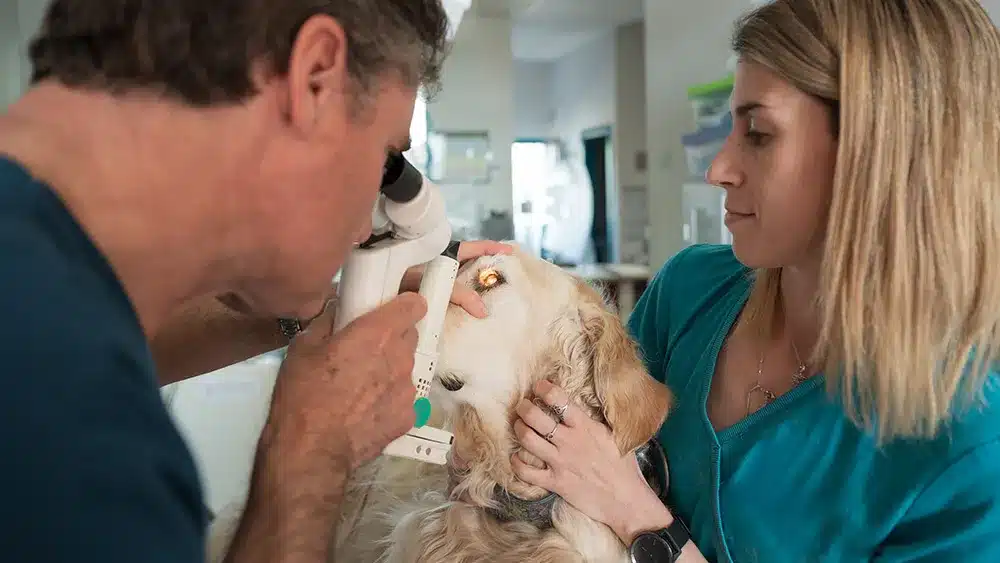
When a cataract clouds the lens, no diet, eye drop, or supplement can clear it, surgery is the only path back to restore vision. What surprises most pet owners is that your pets get the same cataract surgery you would, performed with the same technique, phacoemulsification. If you’ve read our guide to cataract surgery and lens replacement, the process will look familiar.
- The surgery. A tiny incision, ultrasound to break up the clouded lens, and in most cases a clear artificial lens to replace it. One difference from human surgery: veterinary IOLs use a standard lens power for all dogs, rather than measuring for a custom fit.
- The success rate. Cornell reports up to 80 to 90% in dogs; the Royal Veterinary College cites around 90% for dogs and cats alike in good candidates.
- The timing. Operating before a cataract turns mature or hypermature gives your pet the best chance at a full recovery.
- What about drops? Your vet may prescribe anti-inflammatory drops in the lead-up to calm irritation and keep your pet comfortable while you wait for surgery day to arrive.
What About Treatments for Other Eye Problems in Cats? Uveitis and hypertension respond well to anti-inflammatory or blood-pressure medication once the underlying cause is treated. Glaucoma is usually managed first with pressure-lowering eye drops, with surgery reserved for cases drops can’t control.
Frequently Asked Questions About Dog Cataracts & Eye Problems in Cats
Cataracts raise a lot of questions beyond what we’ve covered so far, from cost and comfort to whether they can be prevented. Here’s what owners ask us most:
1. Are Cataracts Painful For Dogs & Cats?
Not directly, but the inflammation a cataract can trigger is, and left untreated, that inflammation can progress to glaucoma, which genuinely hurts. Prompt care heads that off and keeps your pet comfortable.
2. Can Managing My Dog’s Diabetes Stop Cataracts From Forming?
Even with tightly controlled blood sugar, most diabetic dogs still develop cataracts, as the damage happens through a process inside the lens itself, where excess sugar converts to a substance called sorbitol that draws in water and clouds the lens from within.
3. Does Pet Insurance Cover Dog Cataract Surgery?
Often, yes, if the cataract develops after your coverage begins and isn’t considered pre-existing. Check your policy and ask your provider before scheduling surgery.
Clear Eyes for Every Member of the Family – Yours Included
If your dog or cat is showing signs of a cataract, the ACVO ophthalmologist search will point you to a board-certified veterinary ophthalmologist. If this blog raised a question about your own cloudy or blurry vision, the same surgery that restores a pet’s sight can restore yours. Best Cataract Surgeons makes it simple:find a top-rated cataract surgeon near you and bring your own world back into focus.
About the Author Written by Dr. Michael Shumski, M.D., M.S.E.

Dr. Shumski is a board-certified ophthalmologist specializing in cataract & refractive surgery at Magruder Laser Vision in central Florida.