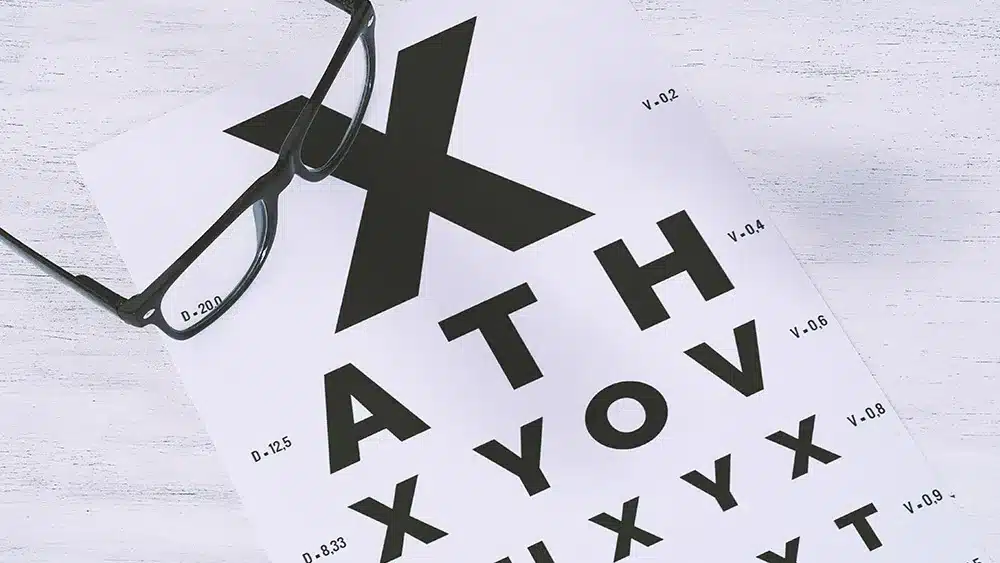





Ever wondered what those blurry letters on an eye chart really reveal about your vision? As you prepare for cataract surgery, these vision metrics tell a powerful story that goes far beyond simple letter recognition. Your eye chart readings don’t just measure how well you see—they document your entire journey from cataract development through surgical recovery, with over 98% of patients achieving improved vision. Below, we’ll decode what your baselines mean, recovery milestones, and tracking methods.
How Do Eye Charts Work?
The standard eye chart—called a Snellen chart—uses progressively smaller letters to measure your visual acuity with remarkable precision. When your ophthalmologist records your vision as “20/40” or “20/100,” this simple fraction reveals crucial information about your current sight and helps guide treatment decisions.
Here’s what these numbers actually mean:
- First number (20): The standard testing distance of 20 feet.
- Second number: The distance at which someone with normal vision could read the same line.
- Example: 20/40 vision means you must be 20 feet away to see what others see clearly at 40 feet—essentially half the clarity of normal vision.
Before cataract surgery, many patients experience vision ranging from 20/50 to 20/400, depending on cataract density and maturity. Understanding these baseline measurements becomes essential as you move through the surgical process, since they establish your starting point and help predict your potential for improvement.
What Do Declining Eye Chart Numbers Mean for Your Vision?
Now that you understand how eye chart measurements work, let’s explore how cataracts gradually decline these numbers. When proteins in your natural lens clump together, your eye chart readings decline in predictable patterns that correspond to specific functional limitations
| Vision Level | Eye Chart Reading | Real-World Impact | Surgical Urgency |
| Mild Cataracts | 20/30 to 20/50 | Slight glare, halos around lights. | Monitor Annually |
| Moderate Cataracts | 20/60 to 20/100 | Reading requires bright light, and night driving becomes unsafe. | Surgery Recommended |
| Advanced Cataracts | 20/120 to 20/200 | Can’t recognize faces across the room; legally blind threshold. | Urgent |
| Dense Cataracts | 20/400+ | Only large “E” visible; severe independence loss. | Immediate Intervention |
Board-certified surgeons use these measurements alongside advanced testing to determine optimal surgical timing. Patients typically seek surgery when readings drop below 20/60, severely impacting quality of life.
When Should You Consider Surgery Based on Eye Chart Results?
Sometimes your eye chart may read 20/40, but debilitating glare makes driving impossible. Our in-network surgeons evaluate multiple factors beyond basic acuity: contrast sensitivity, night vision capabilities, and your specific lifestyle demands. This comprehensive approach explains why many patients report dramatic improvements even when their pre-surgery eye chart seemed “acceptable.” Ready to restore your vision?Find a board-certified surgeon near you who can evaluate your specific eye chart results and surgical candidacy.
How Does Your Eye Chart Improve During Cataract Surgery Recovery?
During your cataract surgery recovery, your eye chart transforms into a progress tracker, documenting steady improvements over weeks and months. With modern surgical techniques, patients experience predictable eye chart improvements that restore independence and safety.
What Eye Chart Changes Can You Expect Week by Week During Recovery?
| Recovery Phase | Eye Chart Reading | Patient Experience | Expected Outcome |
| 24-48 Hours | 20/80 to 20/60 | Colors brighten; some fluctuation is normal | Initial improvement |
| Weeks 1-2 | 20/60 To 20/40 | Resume light activities; reduced glare | Driving Vision Returns |
| Month 1-2 | 20/40 to 20/25 | Final clarity emerges; stable results | 94% achieve 20/40 vision or better |
During your cataract surgery recovery, your surgeon tracks these eye chart progressions at scheduled follow-ups, ensuring your healing aligns with expected improvement patterns. Any concerns are addressed promptly through comprehensive post-operative care that makes cataract surgery one of medicine’s safest procedures.Connect with a top-rated surgeon who specializes in advanced cataract surgery recovery protocols.
How Can You Track Your Eye Chart Recovery at Home?
While your surgeon uses advanced digital eye charts and specialized testing, you can monitor your own cataract surgery recovery progress by noting improvements in daily visual tasks:
- Reading ability: Notice when you can read smaller print or need less lighting
- Distance clarity: Observe improvements in reading street signs or recognizing faces
- Night vision: Track reduced glare and better clarity in low-light conditions
- Color perception: Many patients notice enhanced color vibrancy during cataract surgery recovery
Contact your surgeon immediately if you experience sudden vision drops, new floaters, or persistent pain. Patients who actively monitor their cataract surgery recovery often identify potential issues earlier and report higher satisfaction with their results.
FAQs About Eye Chart Results and Cataract Surgery Recovery
Questions about your eye chart results during the healing process? Our experienced surgeons answer the most common concerns:
- Why Do Eye Chart Readings Vary Between Appointments?
Cataracts cause fluctuating vision as they mature, leading to different eye chart results depending on lighting conditions, pupil size, and cataract density changes. This variability signals progression and helps your surgeon determine optimal surgical timing.
- How Accurate Are Smartphone Apps for Tracking My Cataract Surgery Recovery?
Smartphone apps provide general guidance but cannot replace professional eye chart testing during cataract surgery recovery. Your surgeon’s equipment measures precise visual acuity and detects subtle changes apps miss. Use apps for awareness, but rely on professional testing for accurate monitoring.
- Can Other Eye Conditions Affect My Post-Surgery Eye Chart Results?
Yes, pre-existing conditions like macular degeneration, diabetic retinopathy, or glaucoma may limit your final eye chart improvements even after successful cataract surgery recovery. Your surgeon will discuss realistic expectations based on your eye health and may recommend additional treatments.
- What If My Eye Chart Results Plateau Below Expectations During Recovery?
While most surgeries achieve excellent outcomes, factors like posterior capsule opacification (treatable with YAG laser) or residual refractive errors may affect results. Secondary procedures can often improve your eye chart measurements during later stages of cataract surgery recovery.
Find Your Board-Certified Cataract Surgeon Today
Your eye chart tells the complete story of your vision journey—from clouded sight to crystal clarity after cataract surgery. At Best Cataract Surgeons, we connect you with board-certified specialists who combine advanced techniques with meticulous recovery protocols to optimize your results.
About the Author Written by Dr. Michael Shumski, M.D., M.S.E.

Dr. Shumski is a board-certified ophthalmologist specializing in cataract & refractive surgery at Magruder Laser Vision in central Florida.